Solar panel cleaning that pays for itself.
Florida pollen, bird droppings and grime can silently cut your production up to 25%. We deep-clean your panels the right way — no harsh pressure — and send you the before-and-after proof.
What is professional solar panel cleaning?
Professional solar panel cleaning is a soft-wash service that safely removes the pollen, bird droppings and Florida grime that block sunlight and quietly cut your output. Service Solar Pros cleans residential solar systems across Central Florida — Leesburg, The Villages, Ocala, Clermont, Orlando and 8 more towns — and sends before-and-after photos on every job.
Dirty panels are quietly costing you.
Output drops as soiling builds — you pay the utility the difference.
Pollen, hard-water spots and bird droppings block sunlight.
Debris and droppings accumulate faster and bake on in the sun.
Rinsing with a hose isn't a service — buildup needs proper cleaning.
What a cleaning visit includes
- Soft-wash deep clean with purified water — safe for glass & seals
- A quick production/health check while we're on the roof
- Inspection for cracks, hot spots and loose connectors
- Bird & debris check around the array
- Before-and-after photos of every panel
- Honest report — no upsell, no pressure
How often should you clean solar panels in Central Florida?
| Your setting | Recommended frequency | Main soiling source |
|---|---|---|
| Near oak or pine trees | 3–4× per year | Pollen, sap & leaf litter |
| Near farms or dirt roads | 3–4× per year | Sand & pasture dust |
| Lakefront / heavy bird activity | 2–3× per year | Droppings, humidity & algae |
| Typical suburban roof | 2× per year | Pollen & lovebug seasons |
| Seasonal / snowbird home | 1–2× per year | Lower use, steady soiling |
Industry reference guidance — your system may vary.
Soft-wash or pressure-wash — what actually cleans a panel without wrecking it?
Short answer: soft-wash, every time. A solar panel is tempered glass with an anti-reflective coating on top and rubber gaskets, a junction box, and edge seals underneath. Pressure washers commonly run 1,500 PSI and up, and that force is exactly what the module was never rated to take. Push high-pressure water at the frame edge and you can drive moisture past the seal, which is how you end up with delamination, a fogged corner, or a failed bypass diode months later. Panel makers such as Qcells and SunPower spell this out in their own care instructions: use low-pressure water and a soft brush or squeegee, never a pressure washer.
Our crews wash the way the manufacturers ask for it — low pressure, a soft bristle head, and a mild agent that lifts pollen and bird mess without stripping the coating. It is slower than blasting a roof with a wand, and it is the only method that keeps your warranty intact.
Why does Florida water leave spots, and does spotting really cost you output?
Central Florida runs on hard water — well and municipal supplies here carry a lot of dissolved calcium and magnesium. Let that water dry on hot glass at midday and the minerals flash into a chalky film. Those spots are not just ugly; each one behaves like a tiny patch of shade, and shade on a cell drags down the string it sits on. That is the same reason we never clean in direct midday sun.
We time cleanings for early morning or late afternoon when the glass is cool, and on spot-prone roofs we finish the rinse with low-mineral or deionized water and squeegee it off so nothing dries in place. The goal is glass that dries clear, not glass that dries streaked.
How often should panels be cleaned in Central Florida — and when is DIY a bad idea?
There is no single number, because your roof's environment sets the pace. NREL's PVWatts model assumes a 2% annual loss to soiling as a national default, but that is an average — a roof shaded by oak and pine through the February-to-April pollen peak, or one downwind of a poultry operation or a dusty county road, dirties far faster than a clean suburban rooftop. As a working guide: once or twice a year for a clean site, three to four times for pollen-heavy, tree-lined, or bird-heavy roofs.
Plenty of homeowners can rinse a low, walkable array themselves. It becomes risky fast, though, and here is where we tell people to call instead of climb:
- Two-story or steep-pitch roofs, or anywhere you would have to walk on the modules (stepping on glass causes hidden micro-cracks).
- Hard-water hose rinses that bake spots right back on.
- Any pressure washer — it is the single most common way homeowners void a panel warranty.
- Wet glass on a slope, plus live DC wiring, is a genuine fall-and-shock hazard.
What homeowners say
Dustin was very professional and did a great job cleaning my solar panels. I would recommend his team anytime for service.
The team showed up exactly when they said. So polite. They did a great job. No more pollen on the panels! Best price I found. Very pleased.
For the first time in years my solar/Generac problem has been fully addressed. Dustin is very knowledgeable and very professional. He answered my call immediately and made an appointment in a timely manner. I was extremely satisfied with his service.
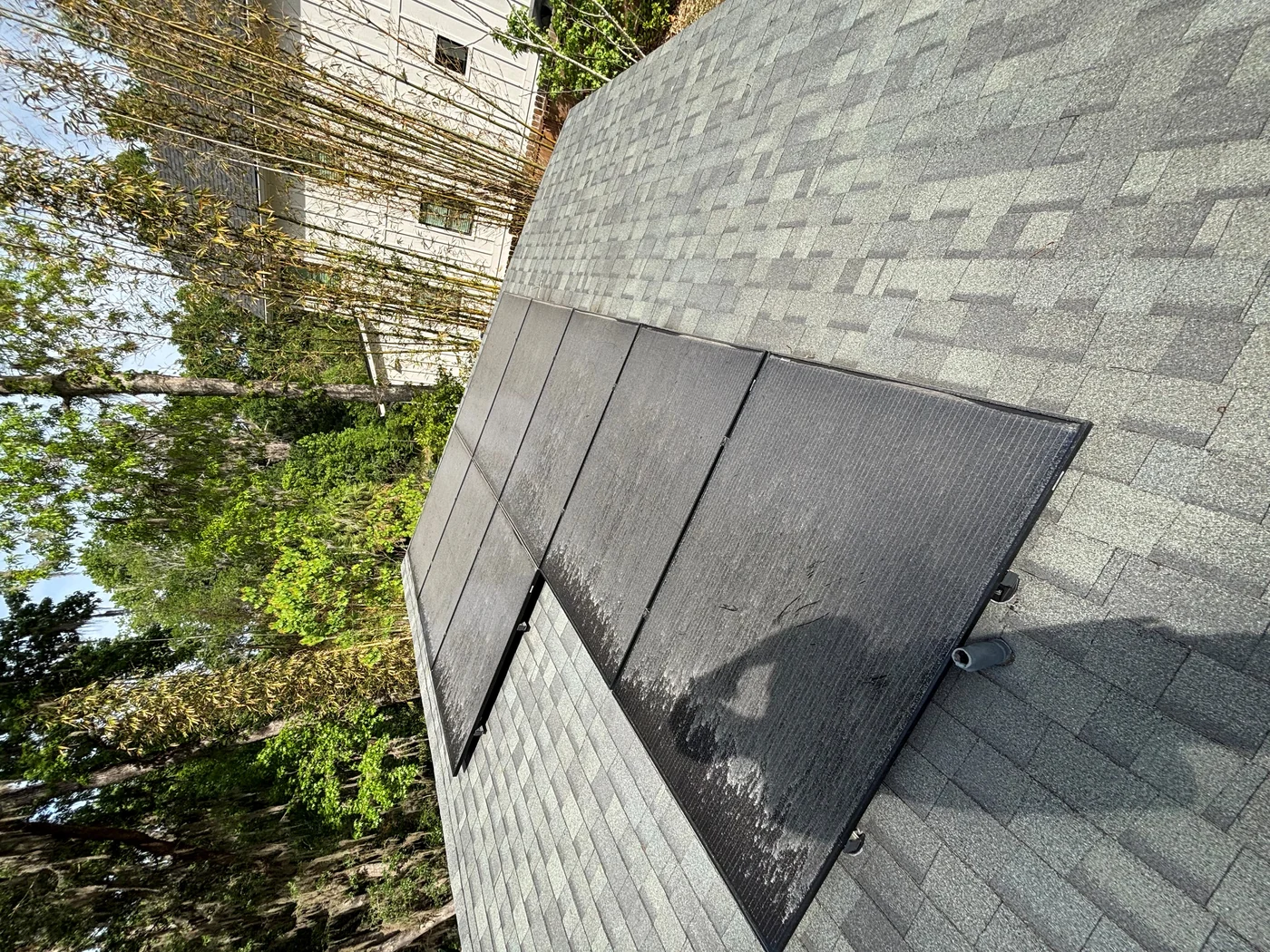
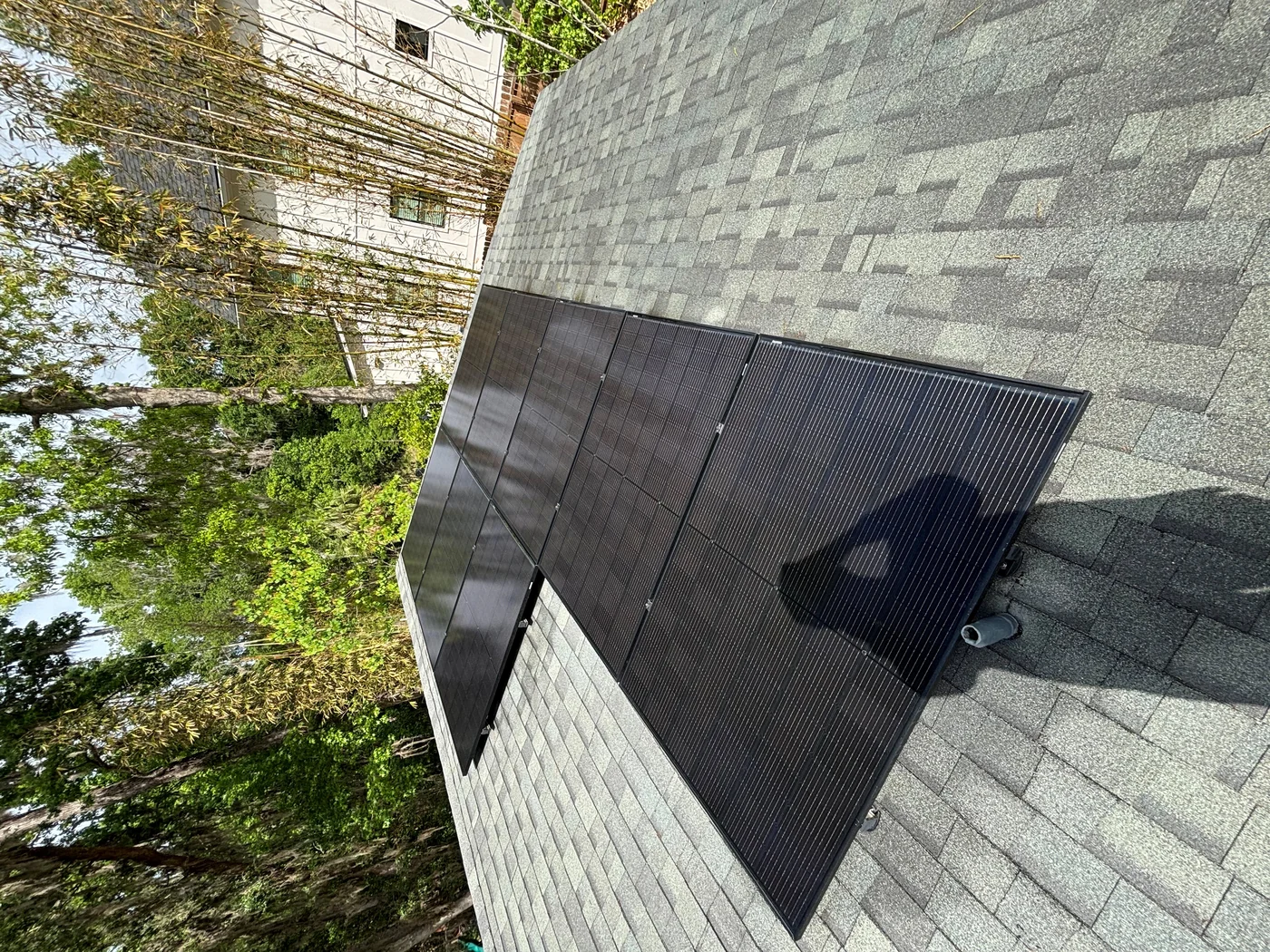
See the difference.
Drag to reveal a real Central Florida job.
Licensed specialists — not pressure-washers dabbling in solar.
Solar Panel Cleaning — answered.
How often should I clean my solar panels?
Do you use pressure washers?
Will cleaning really increase my output?
Can you clean panels you didn't install?
Will cleaning really raise my production, or is it a gimmick?
Can I just let the rain clean them?
Do you use my hose water or something special?
How much does solar panel cleaning cost in Central Florida?
Everything after the install.
Ready to service your solar system?
Free quote, fast callback, and before-and-after proof on every job. Licensed, insured, and local.
Plain-English definitions — tap a term to learn more.