Set it and forget it.
A simple maintenance plan keeps your system producing at its best year-round — scheduled cleanings, a yearly inspection and a monitoring check — so small issues never become expensive ones.
What does solar panel maintenance include?
Solar panel maintenance is scheduled care that keeps your system producing at its best — regular professional cleanings, a yearly full inspection of panels, inverters and wiring, and a monitoring health check — so small issues never become expensive ones. Service Solar Pros offers homeowner-friendly maintenance plans across Central Florida, any brand, any installer.
Why a maintenance plan pays off.
Rooftop systems get forgotten until production drops.
A loose connector or dirty panel quietly costs you for months.
Know your investment is cared for — on a schedule.
Plan members get faster scheduling.
What's in a maintenance plan
- Scheduled professional cleanings through the year
- Annual full-system inspection (panels, inverters, wiring)
- Production & monitoring health check
- Critter-guard and seal check
- Priority scheduling for members
- A record of every visit with photos
What an annual maintenance visit checks
| Check | What we verify | Why it matters |
|---|---|---|
| Production vs. expected | Monitoring & meter data | Catches quiet output loss |
| Inverter health | Error logs & temperatures | Inverters fail first (~10–15 yr life) |
| Connections & torque | Hot spots, corrosion, tightness | Loose DC connections cause faults & fire risk |
| Panels & mounting | Cracks, soiling, flashing, wind clamps | Protects the roof & the warranty |
Industry reference guidance — your system may vary.
What does a real maintenance plan cover, and why does cadence matter?
Solar is often sold as install-it-and-forget-it, and for the panels themselves that is mostly true. The rest of the system is not. Connections work loose under years of thermal cycling, inverters age on a predictable curve, monitoring quietly stops reporting, and soiling creeps up on output a fraction at a time. A maintenance plan is simply catching those things on a schedule instead of discovering them from a surprise power bill.
A proper plan covers the electrical and the physical: inverter status and error-log review, DC/AC checks, a torque check on lugs and rail hardware, connector and MC4 inspection, a soiling assessment and cleaning as needed, a thermal or visual scan for hot cells, and confirmation that your monitoring is actually reporting. For most Central Florida homes, once or twice a year is the right cadence — the higher end if you are under heavy tree cover or near dust, salt, or wildlife.
The real ROI: catching a small problem before it becomes a dead system
The math on maintenance is about avoided loss, not just tidy panels. Panel output already creeps down about 0.5% a year on its own (NREL), and that is the loss you accept. What you do not have to accept is the invisible loss on top of it — a failing microinverter dragging one panel, a loose connector adding resistance and heat, or a monitoring gateway that went offline eight months ago so nobody noticed production fell 15%.
Because inverters tend to fail toward the back half of their 10-to-15-year life, a system in year eight or nine is exactly when a scheduled check pays for itself. Finding a warm connector during a routine torque check is a five-minute fix; finding it after it has arced and scorched the junction box is a very different bill — and a safety issue.
Why torque and connection checks are the unglamorous part that matters most
The least exciting item on the checklist is the one that prevents the worst outcomes. Every electrical connection on a solar system carries current, and current through a loose or corroded connection produces heat. Over years of Florida heat-soak and thermal expansion, lugs and terminals back off from their original torque spec.
- Loose connection = resistance = heat — the root cause behind a large share of the arc-fault events Sandia and IEA PVPS document.
- Torque to spec, on a schedule — every connection checked against the manufacturer's value, not guessed by feel.
- Documented each visit — so you have a record of what was checked, when, and what it read.
What homeowners say
Dustin was very professional and did a great job cleaning my solar panels. I would recommend his team anytime for service.
The team showed up exactly when they said. So polite. They did a great job. No more pollen on the panels! Best price I found. Very pleased.
For the first time in years my solar/Generac problem has been fully addressed. Dustin is very knowledgeable and very professional. He answered my call immediately and made an appointment in a timely manner. I was extremely satisfied with his service.
See the difference.
Drag to reveal a real Central Florida job.
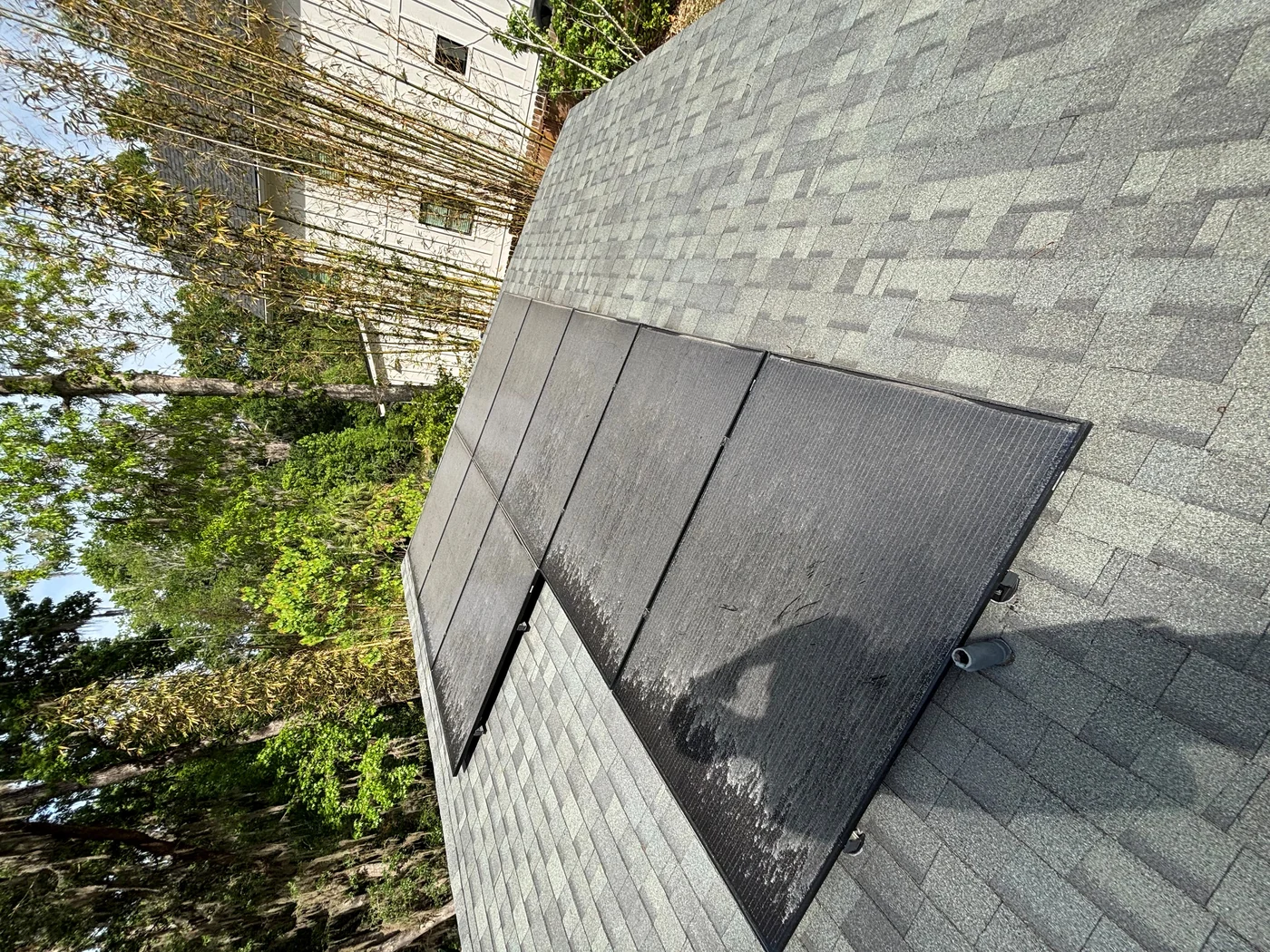
Licensed specialists — not pressure-washers dabbling in solar.
Solar Maintenance Plans — answered.
What does a maintenance plan cover?
How often will you come out?
Can I start a plan on an older system?
Is there a contract?
My system seems fine. Do I really need a plan?
How often should the system be serviced?
What is the single most valuable thing a plan catches?
How much does a solar maintenance plan cost?
Everything after the install.
Ready to service your solar system?
Free quote, fast callback, and before-and-after proof on every job. Licensed, insured, and local.
Plain-English definitions — tap a term to learn more.