How Often Should You Clean Solar Panels in Florida?
Want a pro to take a look? Call (407) 270-2542 or request a free quote.
- Baseline: every 6-12 months for a typical Central Florida home; every 3-6 months under oak or pine, near birds, or by dust.
- Rain is not a cleaning. It rinses loose dust but leaves bonded pollen and droppings behind.
- Florida's oak pollen (late Feb-May) and lovebugs (May and September) are the two dirtiest windows of the year.
- Dirt can quietly cut your production, and you end up buying that power back from the utility.
How often should you clean solar panels in Florida?
For a typical home in Lake, Sumter, Marion, Orange or Osceola County, twice a year is the sweet spot. Clean in spring after pollen season winds down, then again in fall. Once a year is the bare minimum I'd recommend, and only for a wide-open roof with nothing hanging over it. For the full picture, see our complete guide to solar panel cleaning in Florida.
Move up to every 3 to 6 months if any of these sound like your place:
- Oak, pine, or other trees dropping pollen and debris on the array
- Birds roosting on the roof or nesting under the panels
- A dirt road, construction, or farmland kicking up dust nearby
- A low-slope roof where water and grime pool instead of running off
Truth is, there's no universal number. A panel on a wide-open Villages lot gets dirty at a totally different rate than one under a Mount Dora oak canopy. When we're up on your roof for a professional solar panel cleaning, we'll tell you what your system actually needs. No upsell.
Florida cleaning schedule at a glance
The takeaway: Twice a year suits most homes. Trees, birds or dust nearby mean cleaning more often, and rain won't do it for you.Service Solar Pros
Does rain clean solar panels for you?
This is the biggest myth I hear in Central Florida, and I get why: we get plenty of rain. But it's not enough. Even with frequent rain, panels that need a clean do not get back to their clean-panel output.
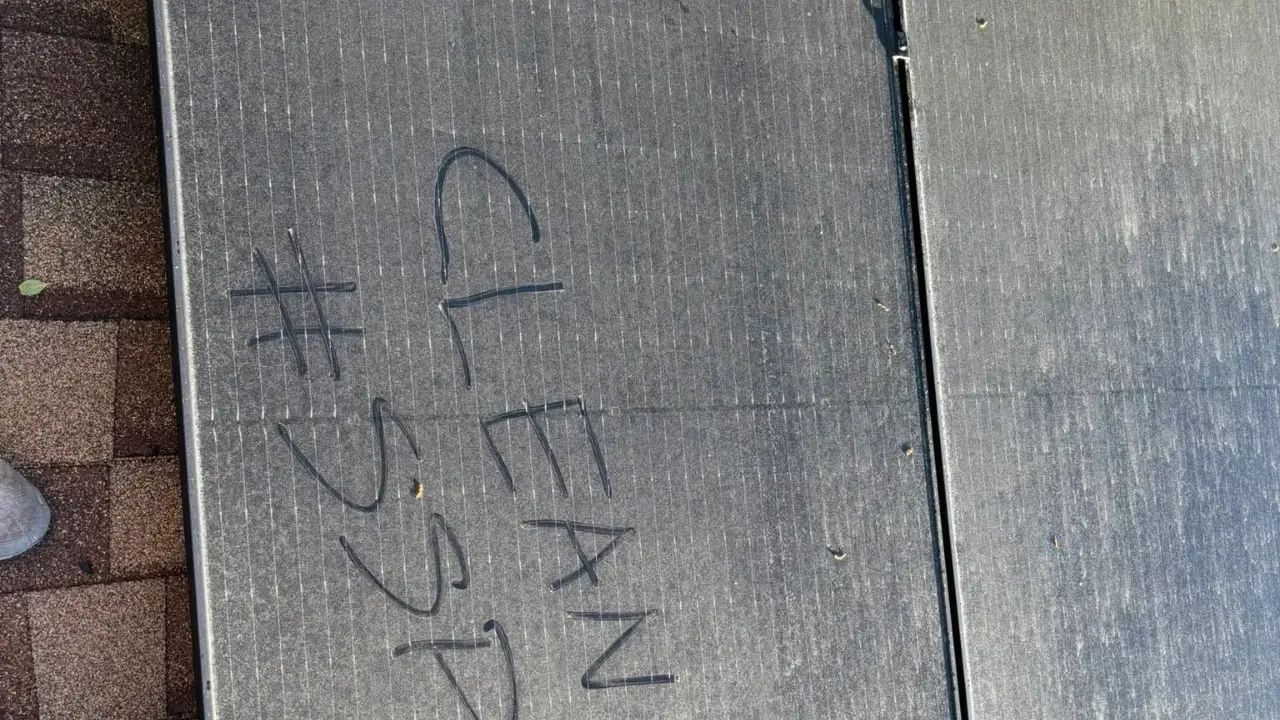
Pollen bonds to the glass, and rain only rinses the loose top layer. The sticky, baked-on stuff stays put. A light Florida rain can even make things worse for a while, smearing dust into a muddy film that dries into streaks.
Bird droppings, lovebug residue and hard-water spots don't rinse off at all. They have to be gently washed away by hand. More on both in how Florida pollen affects solar panels and what causes hard water spots on solar panels.
How much is dirt actually costing you?
More than most people think. Soiling, the industry term for dust, pollen and grime on the glass, blocks the sunlight your cells need. A heavy film can cut output noticeably, and the loss is worst at the spring pollen peak. It keeps growing the longer the panels go without a clean.
Any loss means you're buying that power back from the utility every month. Want the deeper explanation? Read how dirty solar panels lose efficiency. A cleaning that restores that output usually shows up on your very next bill.
What's the dirtiest time of year in Central Florida?
Two windows do most of the damage here, and they're worth marking on the calendar:
- Oak and pine pollen, late February through May. Central Florida tree pollen peaks in March and April, with live oak the worst offender. That yellow-green film on your car is landing on your panels too.
- Lovebugs, May and again in September. Their mating swarms come twice a year, and they're drawn to warm surfaces like solar panels. The splattered residue is acidic and bakes on fast in our sun.
That's why we suggest a late-spring visit after pollen, which also catches the first lovebug round. Then add a fall visit after the September lovebugs, before winter.
What are the signs your panels need cleaning?
You don't have to climb up to check. Watch for:
- Your electric bill crept up with no change in usage, the classic tell that output has slipped.
- Visible film, streaks, or spots you can see from the ground or a window.
- A dusting of pollen on cars, patio furniture, and screens; if it's on those, it's on your roof.
- Birds hanging around the roofline, or droppings on the panels.
- It's simply been over a year since the last professional clean.
Now, if you see a production dip on your monitoring app but the glass looks clean, that may not be soiling at all. It could be an electrical fault, which is a different job. Here's why solar panels stop producing and when to call for a diagnostic instead.
Should you clean them yourself or hire a pro?
You can rinse panels yourself, but I'd gently steer you away from it, for three reasons:
- Roof safety. A wet roof and a ladder are a bad mix, and a fall is the worst outcome of all.
- Warranty risk. Pressure washing and the wrong chemicals can crack seals and void panel warranties.
- Results. A hose rinse leaves behind the bonded pollen and hard-water spots that are costing you output.
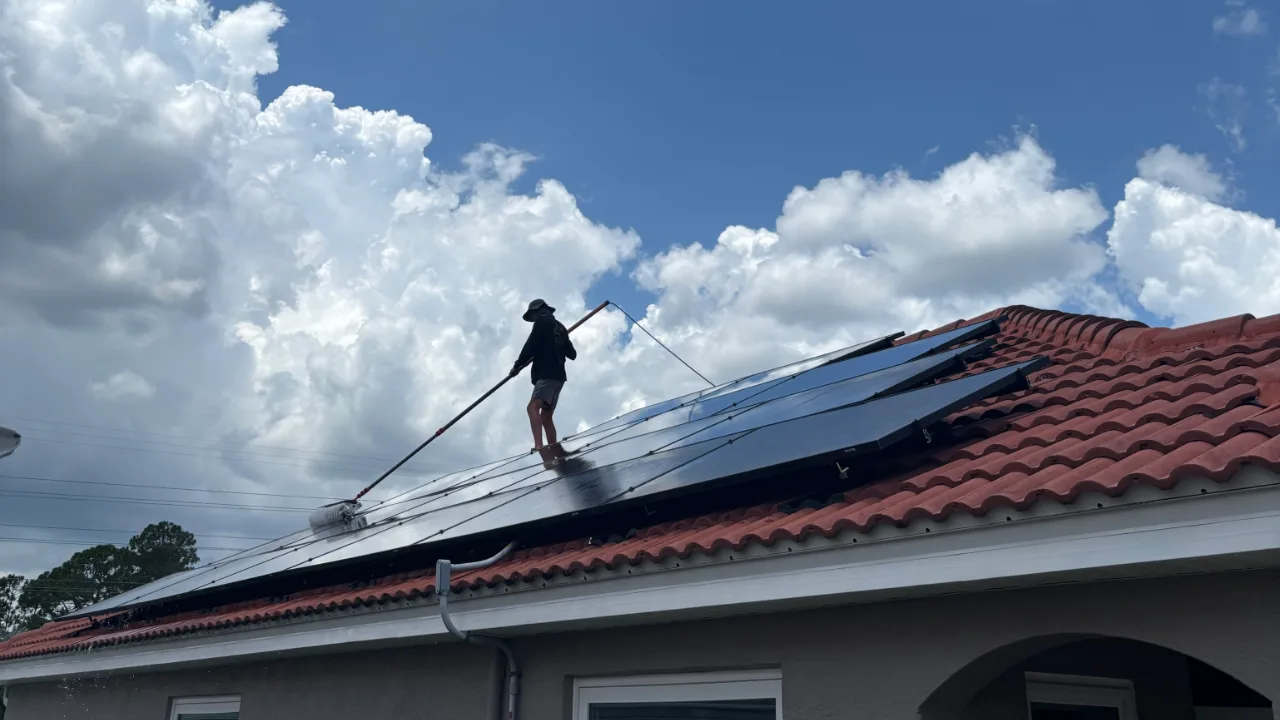
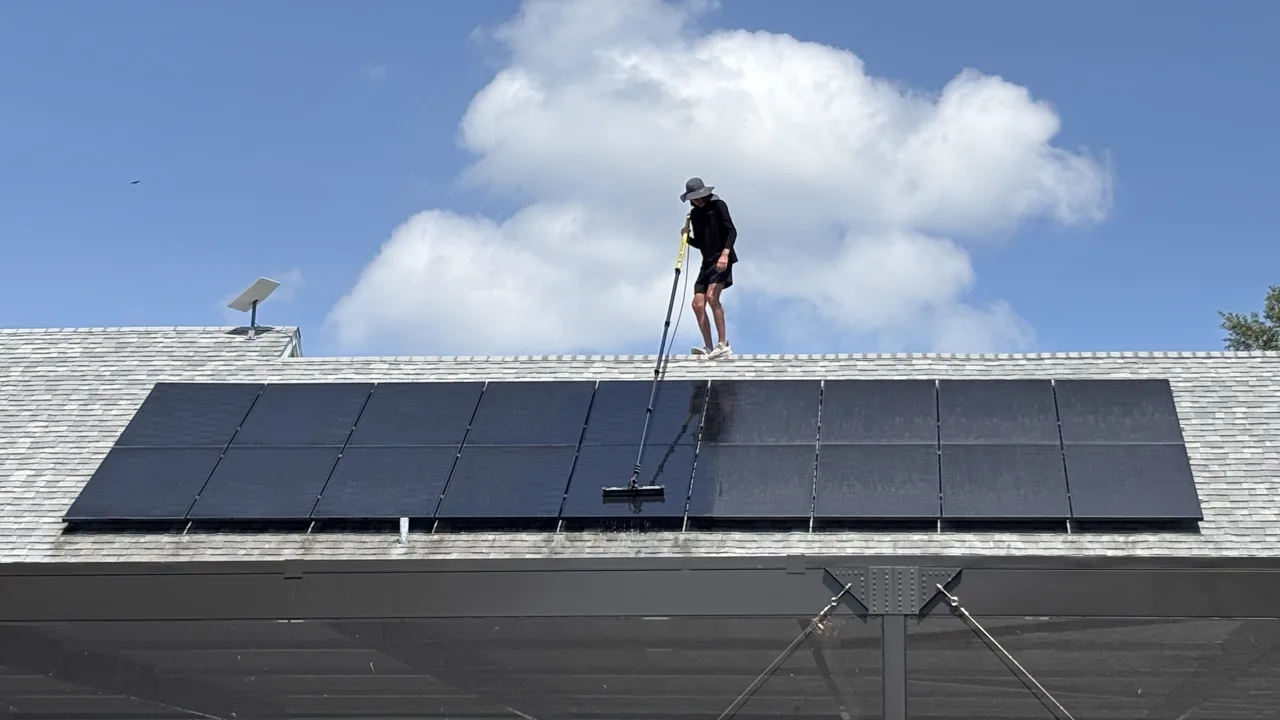
We soft-wash with purified water, the method panel makers call for. We also check for cracks, hot spots and loose connectors while we're up there. On a two-story or steep roof, our crew uses fall protection, so you never have to go up yourself.
If you'd rather never think about it, a solar maintenance plan puts the cleanings on a schedule, with priority booking. Members also get discounted travel and hourly rates. We serve Leesburg, Clermont and all of Central Florida, any brand and any installer, with before-and-after photos on every job. Request a free quote through our contact page or call (407) 270-2542.
Frequently asked questions
How often should you clean solar panels in Florida?
Does rain clean my solar panels?
Will cleaning my solar panels really increase output?
Can I pressure wash my own solar panels?
Do you clean panels you did not install?
Related reading
Next step: see our solar panel cleaning service, or read a related guide:
Serving solar owners across Central Florida
We clean, repair, maintain and protect solar systems throughout the region — any brand, any installer. Find your town:
Need a hand with your solar?
Service Solar Pros — any brand, any installer, across Central Florida. Call (407) 270-2542.
Get a free quote