Do Dirty Solar Panels Lose Efficiency?
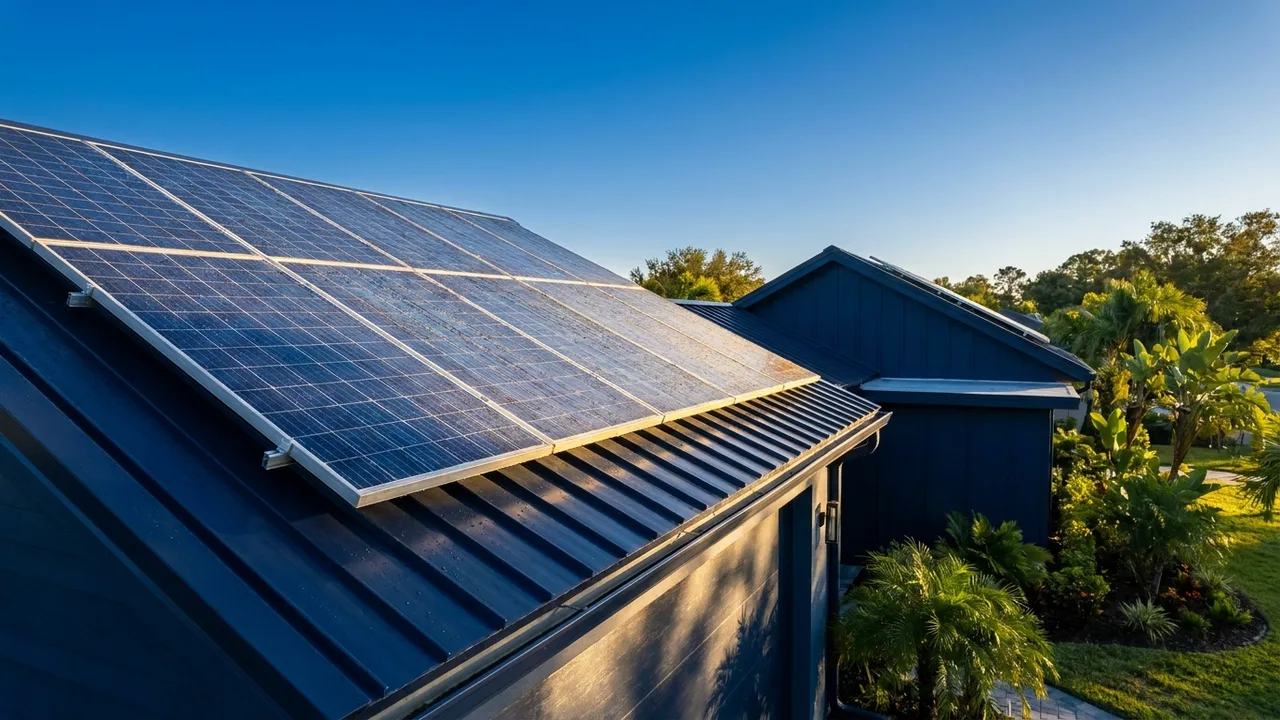
- Soiling blocks light, so dirty panels make less power. Southeast research found up to 15% loss at peak pollen season and around 10% annually.
- In Central Florida the main culprits are oak and pine pollen, road and construction dust, and bird droppings.
- Rain won't fix it. NREL found precipitation doesn't restore panels to their cleaned output.
- A professional soft-wash recovers most of the lost production, often visible on your next power bill.
How much output dirty panels give up
Typical Central-Florida soiling losses on a neglected array. A professional cleaning wins most of it back. Sources: NREL; IEEE Journal of Photovoltaics.
How much output do dirty solar panels lose?
Enough to notice on your bill. When NREL and researchers publishing in the IEEE Journal of Photovoltaics studied solar systems in the pollen-heavy Southeast, they measured production dropping by as much as 15% during peak pollen season, with annual losses of roughly 10% when panels weren't cleaned on a schedule. Those numbers come from utility-scale plants in North Carolina, so a home roof in Florida will vary, but the mechanism is identical to what our climate produces.
Even a modest 5-8% loss matters, because you make up the shortfall by buying power back from the utility every month. For the timing picture, see how often you should clean solar panels in Florida, and our Florida solar panel cleaning guide lays out when losses build up and when to act.
What is soiling, and why does it cut efficiency?
Soiling is the industry word for anything that settles on the glass: dust, pollen, salt haze, lovebug residue, bird droppings. A solar cell only makes power from the light that actually reaches it, so a film on the glass is a direct tax on production. It works two ways:
- Uniform soiling dims the whole array a little, shaving a few percent off everything.
- Patchy soiling, like a bird dropping or a leaf, shades individual cells and can create hot spots, where the shaded cell heats up instead of producing. Over time that stresses the panel and can cause real damage.
If your losses come from a stuck-on spot rather than general dust, it can be an early warning of a fault. Here's how professional solar panel repair handles hot spots and cell-level problems.
What makes Florida panels dirty faster?
Central Florida throws more at your glass than most states:
- Oak and pine pollen (late Feb-May). Live oak pollen is sticky and, per UF/IFAS, peaks in March and April, coating everything in a yellow-green film.
- Lovebugs (May and September). Their acidic residue bakes onto warm panels in our sun.
- Road, farm, and construction dust, plus a general humidity haze that helps grime cling.
All of this builds up between rains, so panels here need cleaning more often than a homeowner in a dry, low-pollen state would expect.
Can cleaning recover the lost efficiency?
In most cases, yes, and fast. Once the bonded pollen, lovebug splatter, and droppings are gently washed away, the cells get full sun again and production climbs back toward where it should be, often visible on your very next monthly bill. The key word is gently: we soft-wash with purified water, so there are no streaks, no scratches, no warranty risk.
If your glass looks clean but output is still down, that points to an electrical issue rather than soiling. To keep losses from creeping back, a lot of homeowners move to a scheduled maintenance plan, and you can weigh the numbers in what solar panel cleaning costs in Florida. We serve Leesburg and all of Central Florida, any brand, any installer. Book a free check on our contact page or call (407) 270-2542.
Frequently asked questions
How much efficiency do dirty solar panels lose?
Will dirty panels damage the system, not just lower output?
Does rain restore panel efficiency?
How do I know if my panels are losing efficiency to dirt?
Serving solar owners across Central Florida
We clean, repair, maintain and protect solar systems throughout the region — any brand, any installer. Find your town:
Need a hand with your solar?
Service Solar Pros — any brand, any installer, across Central Florida. Call (407) 270-2542.
Get a free quote