Protecting Solar Panels From Birds and Critters: A Central Florida Guide
Want a pro to take a look? Call (407) 270-2542 or request a free quote.
Why do birds and critters target solar panels in Florida?
To a bird or a squirrel, the space between your panels and your roof is about as good as it gets. The panels give off heat, so the gap stays warm. It's shaded, hidden from hawks and owls, and out of the wind and rain. Pigeons in particular want a roof over their nest, and the underside of your array gives them exactly that.
Central Florida has it worse than most of the country. Our roofs never get a hard winter freeze, so nesting season drags on and the birds never get pushed out. It's not just birds, either. Squirrels, roof rats and other rodents move into the same pocket and do the same damage, or worse.
A rodent's teeth never stop growing, so it gnaws all the time, and your DC wiring sits right there. Wasps and other pests can build nests in the same gap. For the full rundown, start with our post on whether birds under solar panels cause damage.
One pair of birds raising young under your array will come back, and they bring family. A small headache this spring can turn into a colony next year. That's why the best day to deal with it is today, before anything touches the wiring.
What damage do birds and critters actually cause?
Most homeowners figure it's just a mess on the glass. It isn't. Here's what we actually find on Central Florida roofs.
- Chewed and loose wiring. While nesting and gnawing, animals chew the DC wiring under your panels and knock it loose. That can drop one panel or a whole row offline, and damaged wiring is a real fire hazard. Squirrels are the worst offenders, so see squirrels chewing solar wires and our solar panel repair service.
- Acidic droppings that corrode. Bird droppings are highly acidic, so they eat into connectors and wear down shingles, membranes and tiles. On the glass, they cause shaded hot spots that stress the cells and drag down output. We cover that in how bird droppings cause output loss.
- Blocked airflow and drainage. Nests, feathers and packed debris stop water from draining and air from moving. Over time, trapped moisture and heat wear on both the roof and the panels.
- Fire risk. This is the one that worries me most. Dry twigs, leaves and grass burn easily, and they sit inches from live electrical connections. That's exactly why I never tell a customer to sit on a critter problem.
What are the warning signs I have birds under my panels?
You'll almost always hear or see signs long before you spot a nest. Watch and listen for these:
- Cooing, scratching or flapping on the roof, loudest at dawn and dusk.
- Droppings and white streaks down the face of the panels, or piling up on the roof below.
- Nesting material such as twigs, straw or feathers poking out from under the panel edges.
- Birds or squirrels landing over and over at the same spot, then vanishing under the panels.
- A drop in output on your monitoring app that you can't explain.
Pigeons get their own mention because they move in fast and their droppings carry health risks. We dig into that in pigeons nesting under solar panels in Florida.
Signs critters live under your panels
- Noise on the roofCooing, scratching or flapping, loudest at dawn and dusk.
- Droppings and streaksWhite streaks on panels, or piles on the roof below.
- Nest materialTwigs, straw or feathers poking out from panel edges.
- Repeat landingsBirds or squirrels landing at one spot, then vanishing.
- Unexplained output dropYour monitoring app shows a dip you can't explain.
The takeaway: You'll hear or see signs long before you spot a nest. Act early, before anything touches the wiring.Service Solar Pros
How do you keep birds and critters out for good?
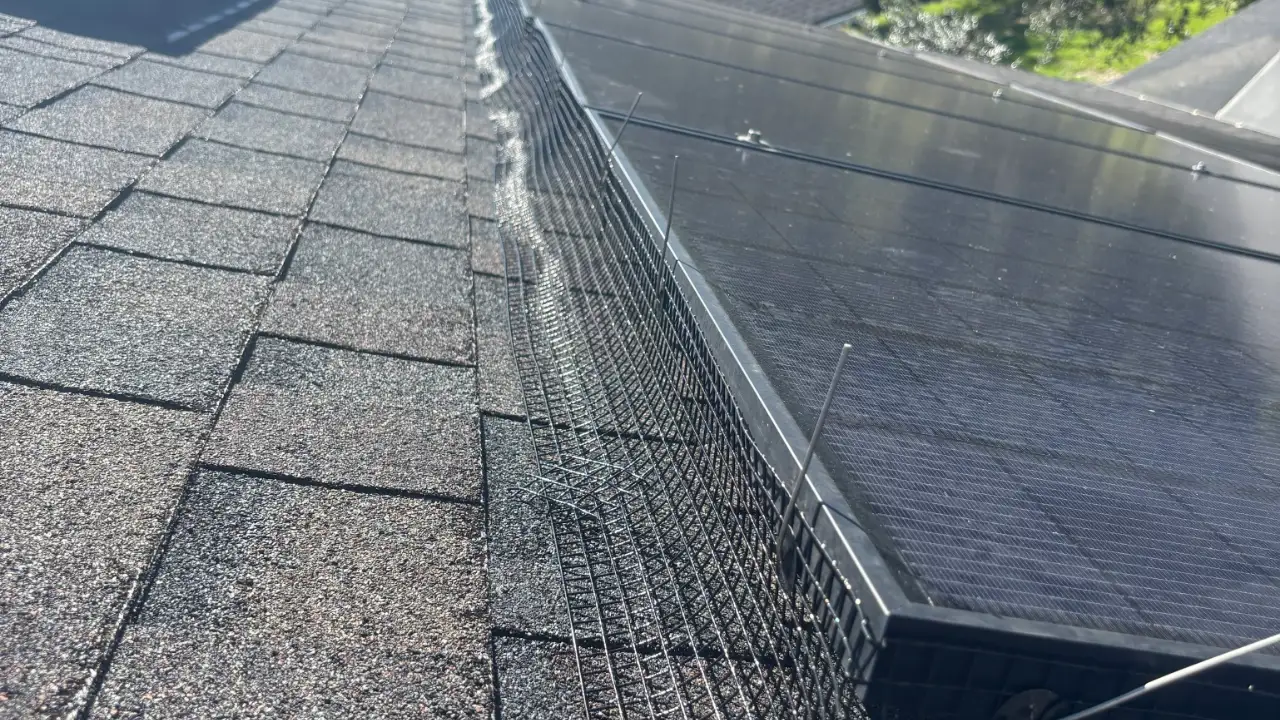
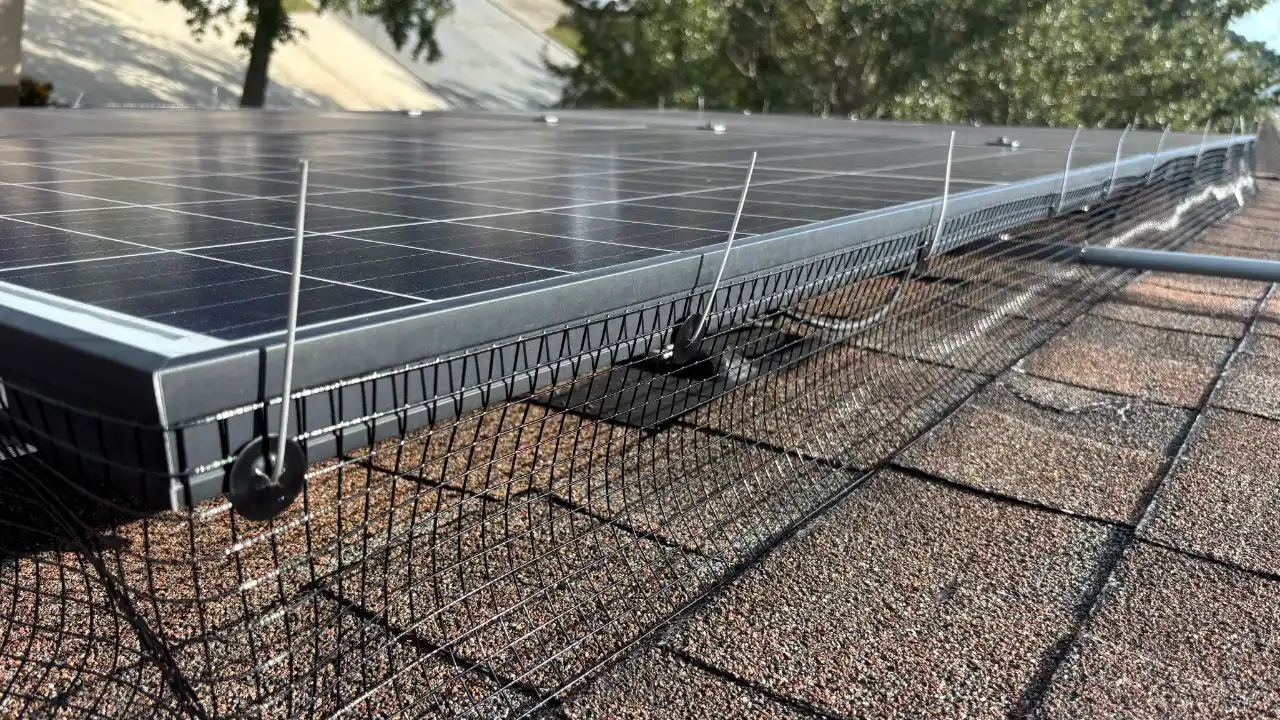
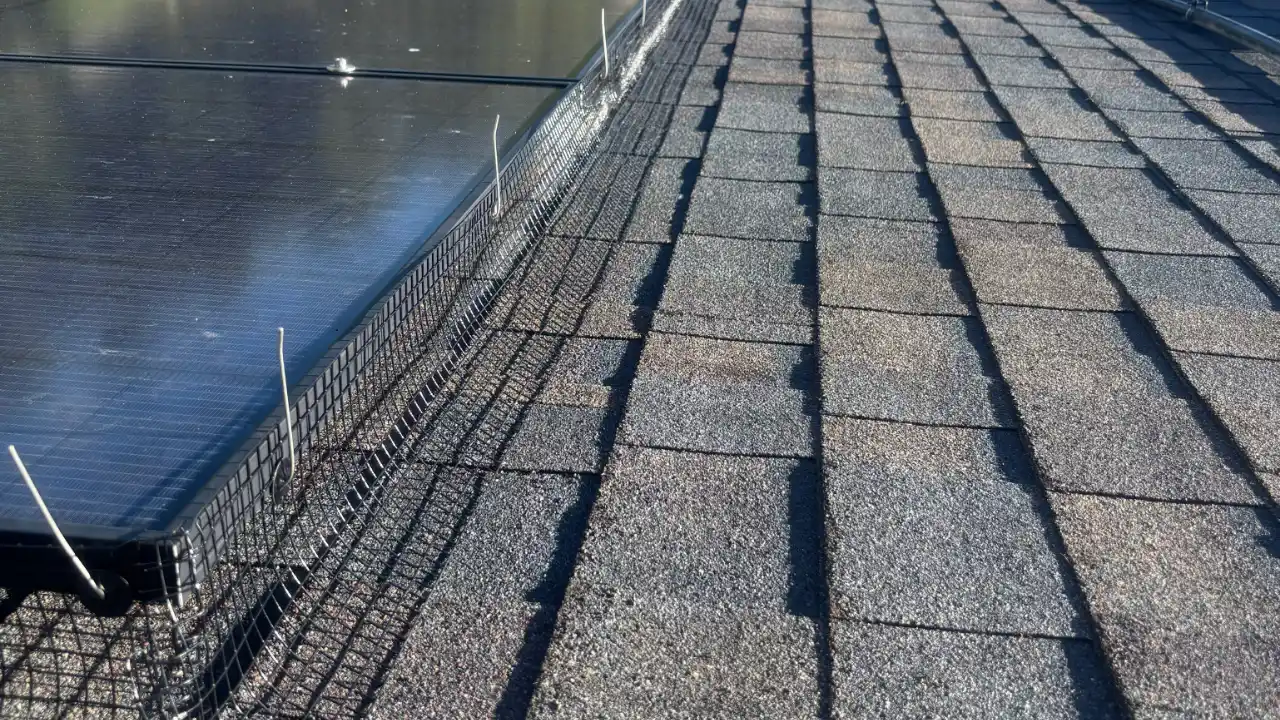
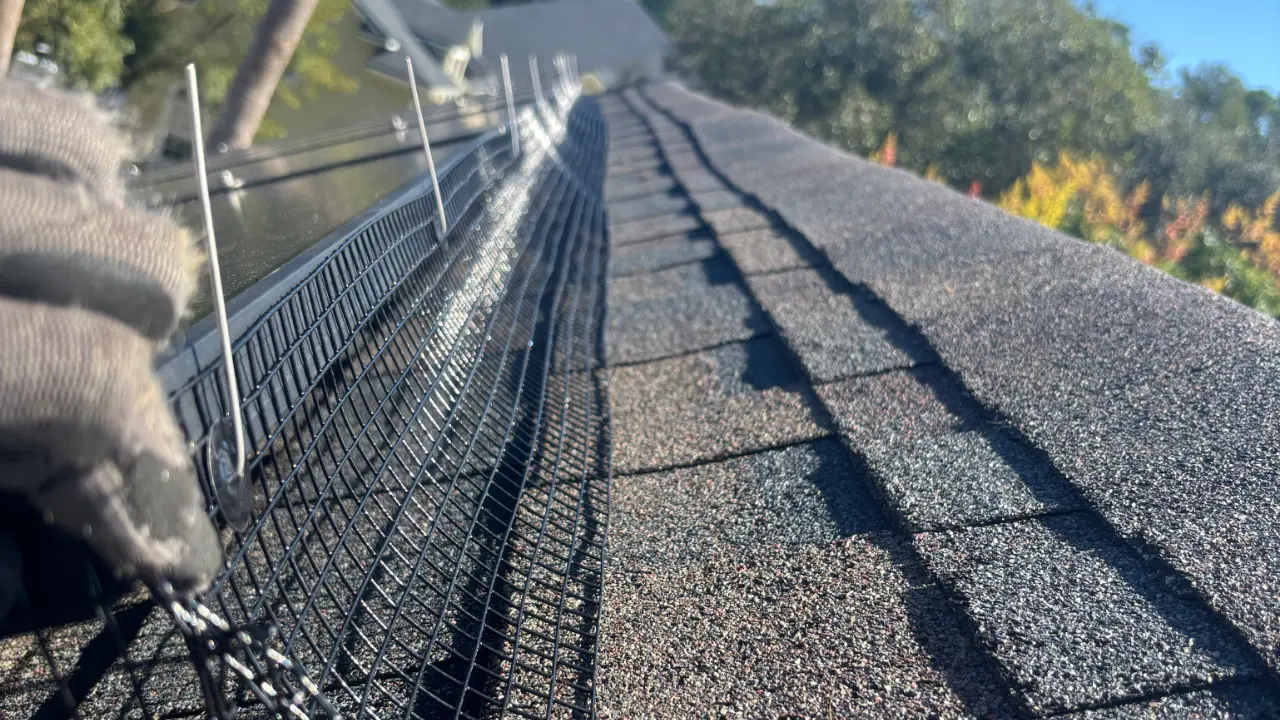
Scare tactics like spikes, plastic owls, shiny tape and gels don't last. Some never work under a solar array, and the rest stop working once birds figure them out. The fix that lasts is solar critter guard, a low-profile mesh clipped around the whole edge of your array. Done right, it:
- Clips to the panel frames, with no drilling into your roof or panels, so your warranties stay intact.
- Seals every gap around the array, so birds, squirrels and rats can't get in.
- Stays nearly invisible from the ground, because the thin mesh tucks under the panel edges.
For the step-by-step, read how to keep birds out from under solar panels and what solar panel critter guard is. One step you can't skip is to clear, inspect and clean the array before the mesh goes on. Otherwise you seal a damaged wire or a live nest inside.
What does bird-proofing solar panels cost?
The price depends mostly on the size of your array, because a bigger array has more edge to seal. Your roof's pitch and height matter too, along with any cleanup or wiring repair needed first. A single-story home with a modest array costs far less than a big, steep two-story roof with animals already living under it. We break down the drivers in how much bird-proofing solar costs.
The comparison matters more than the price. Critter guard costs far less than a chewed-wire repair, a fire or roof damage. To get your exact price, let us take a look at your roof, and we'll give you a free, firm quote.
Should I remove a nest or install guard myself?
I'd think twice. Climbing on the roof is a real fall risk, and you can disturb wiring you can't see. Droppings and nest debris carry health hazards, so they need proper cleanup and protective gear. There can also be rules about active nests, depending on the species and the time of year.
DIY mesh kits also tend to leave gaps at the corners and clips, and birds find them every time. Our approach never changes. We clear the area humanely and check the wiring for chew damage, then clean up the droppings and seal the edge. If we find a chewed wire or a fault, we handle the repair right then.
How Service Solar Pros protects your array across Central Florida
Service Solar Pros is a solar service company, and we are fully insured. We didn't sell you the system, and we service any brand from any installer. That includes systems whose original installer went out of business. We inspect the array, clean out what's under it, fix any damage and seal the edge with critter guard.
We protect solar systems across Leesburg, The Villages, Ocala, Clermont, Orlando and all of Central Florida. A maintenance plan puts a critter-guard check on one schedule with your cleanings and checkups. Plan members also get discounted travel and hourly rates.
Hearing something under your panels? Request your free critter-guard quote or call (407) 270-2542. We'll take a look before it turns into a repair bill.
Related reading
Next step: see our critter guard and bird-proofing service, or read a related guide:
Talk to a local solar-service pro
Any brand, any installer, across Central Florida. Call (407) 270-2542.
Get a free quote