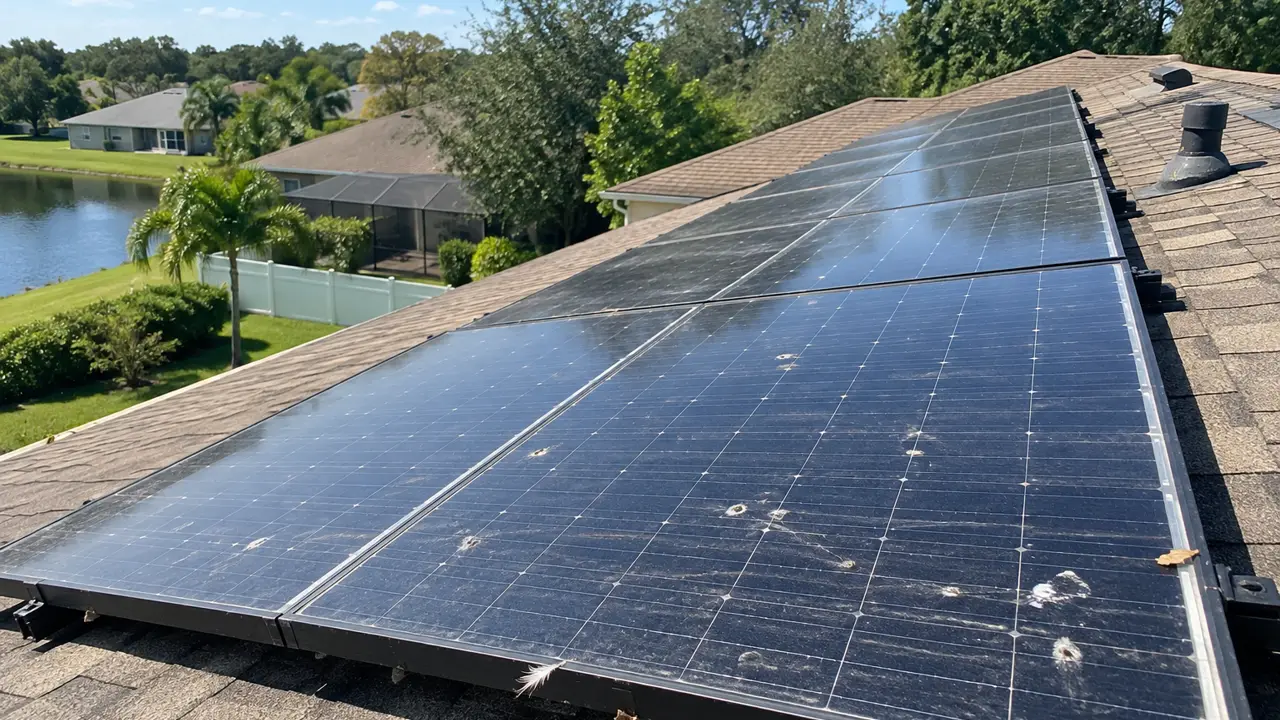
AI-generated image
Want a pro to take a look? Call (407) 270-2542 or request a free quote.
- A dropping does more than dim its own spot. One shaded cell can hold back the whole panel.
- That shading also makes hot spots, which can harm cells for good.
- Droppings are acidic. Over time they eat at the glass coating, the frame and the roof.
- Rain won't rinse sticky droppings off, so they need a proper cleaning.
- Cleaning brings the power back. Critter guard stops the droppings at the source.
How much do bird droppings reduce solar panel output?
More than the size of the mess suggests. You might guess that a dropping on a tiny part of a panel costs a tiny part of its power. Solar does not work that way. The cells in a panel are wired in series, which means they are linked one after another like a chain.
In a chain, the weakest link sets the limit. The current through the whole panel can only be as strong as its most shaded cell. So one dropping on one cell can choke the output of the entire panel. On some systems the loss also spreads down the line to other panels.
The exact loss depends on how your system is built and where the droppings land. It's the same reason a little shade in the wrong spot hurts so much. For the bigger picture, see our bird and critter protection guide.
What are hot spots, and why do droppings cause them?
A cell covered by a dropping stops making power. Instead, it starts to resist the current the other cells still push through it. That resistance turns into heat in one small area, called a hot spot. Over time, repeated hot spots can damage the cell for good, so the panel may never fully recover after cleaning.
That's why bird droppings are worse than ordinary dirt. They block light fully, they sit in thick spots, and they can leave lasting harm instead of a short dip. Hot spots are also behind some panel faults that show up on your monitoring app. Learn more in our guide to solar panel hot spots.
How one dropping drags down a panel
- Dropping blocks the lightThe cell under the dropping stops making power.
- Weakest link sets limitCells are linked like a chain, so the most shaded cell limits current.
- Whole panel output dropsOne dropping on one cell can choke the entire panel.
- A hot spot formsThe shaded cell resists current, and that turns into heat.
- Damage can lastRepeated hot spots can harm the cell for good.
The takeaway: A dropping costs more than the spot it covers. Clean it off soon, before a hot spot does lasting harm.Service Solar Pros
Do bird droppings damage the panel itself?
Yes, beyond the shading. Bird droppings are acidic. Left on the glass, they can eat into the anti-reflective coating, the thin layer that helps light get in. They can also corrode the frame and the mounting hardware.
On the roof, the same acid wears on shingles, tiles and roof membranes. Droppings are sticky too, and the Florida sun bakes them onto hot glass. The longer they sit, the harder they are to remove. So the cost is not just lost power today, but slow damage to the panel and the roof.
We cover the long-term effects in our post on whether bird poop damages solar panels.
Will rain wash bird droppings off my panels?
No, and this is where droppings differ from pollen or loose dust. A Central Florida downpour may rinse off light dust. Bird droppings are sticky and usually baked on, so rain just smears them around. That can even spread the shading across more of the glass.
They need a proper solar panel cleaning with the right water and gentle tools. That lifts them off without scratching the glass. Don't climb onto the roof to scrub them yourself, and don't use a pressure washer. Here is why you should not pressure wash solar panels.
Seeing droppings back within days of a cleaning? That's the real sign that birds live under your array. Cleaning alone will never keep up. Here is how to keep birds out from under solar panels for good.
How can I tell if droppings are costing me power?
Start with your solar monitoring app. A slow drop in daily output, with no change in the weather, can point to dirty or shaded panels. From the ground, look for white streaks or spots on the glass. Birds flying in and out under the panel edges are another clear sign.
If your app has stopped reporting, that is a separate problem. See our guide to fixing a solar monitoring app that is not working. Service Solar Pros can also check the system in person and find what is causing the drop.
How do you fix and prevent output loss from droppings?
Two steps, in order:
- Clean to get the output back. A professional cleaning removes the droppings safely. It wins back the power the shading was costing you, as long as no hot spot has caused lasting damage.
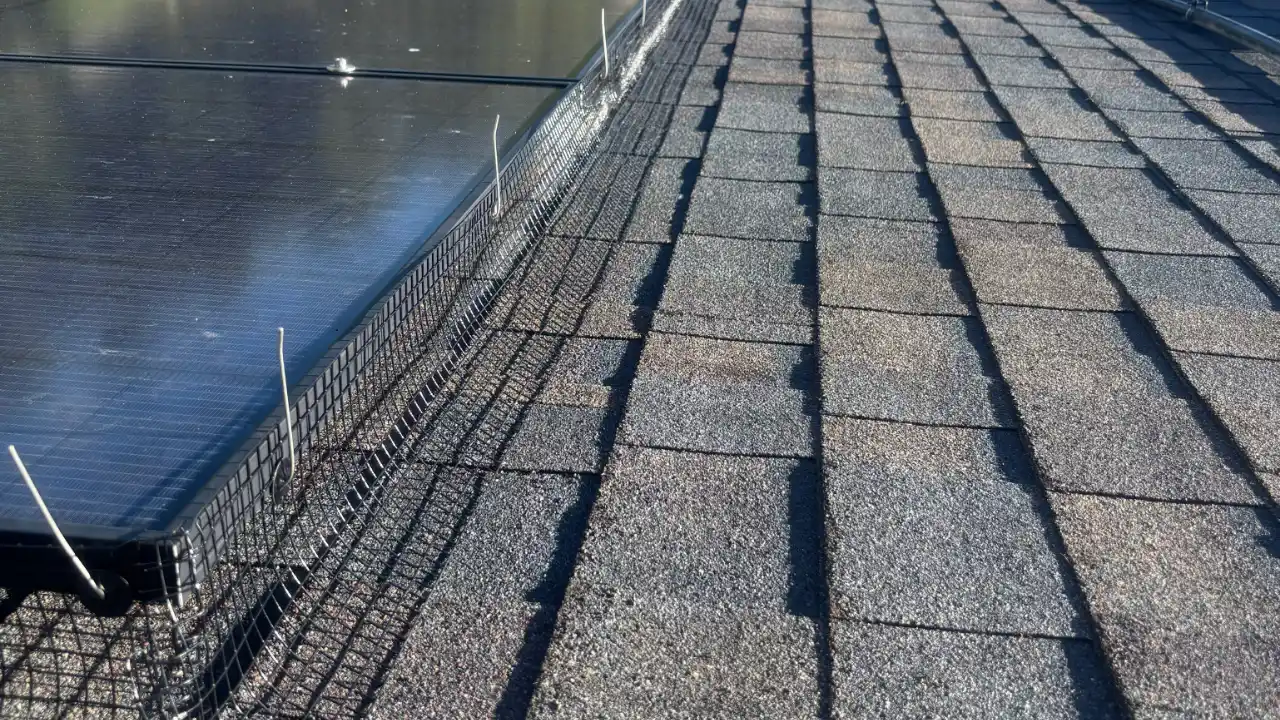
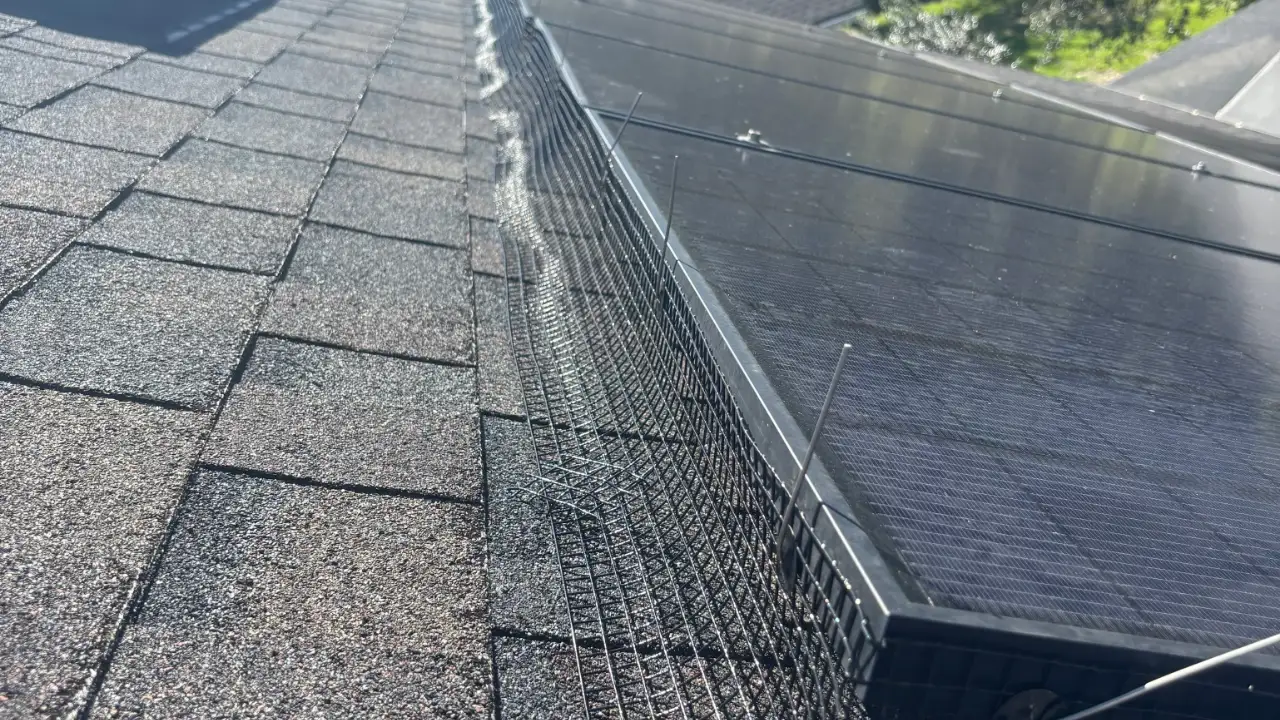
- Seal to stop it coming back. If birds nest under the array, cleaning is a losing battle until you remove the source. Critter guard is a mesh barrier clipped around the edge of the array, with no drilling into your roof. It keeps the birds out, so the droppings stop.
Service Solar Pros handles both across Orlando, Leesburg and the rest of Central Florida. We work on any brand of system, from any installer. A maintenance plan puts cleanings and a critter-guard check on one schedule. That way your output never quietly drifts back down.
Frequently asked questions
How much do bird droppings reduce solar panel output?
Can bird droppings permanently damage solar panels?
Will rain wash bird droppings off solar panels?
How do I stop bird droppings from cutting my solar output?
Related reading
Next step: see our critter guard and bird-proofing service, or read a related guide:
Serving solar owners across Central Florida
We clean, repair, maintain and protect solar systems throughout the region — any brand, any installer. Find your town:
Need a hand with your solar?
Service Solar Pros — any brand, any installer, across Central Florida. Call (407) 270-2542.
Get a free quote