Are Squirrels Chewing My Solar Panel Wires?
- Squirrels and roof rats gnaw constantly because their teeth never stop growing — exposed solar wiring is an easy target.
- Chewed DC wiring can drop a panel or a whole string offline and is a real fire hazard.
- Signs: production drops, scratching or scurrying on the roof, gnaw marks, and droppings under the array.
- The wiring has to be inspected and repaired before the array gets sealed — never seal damage inside.
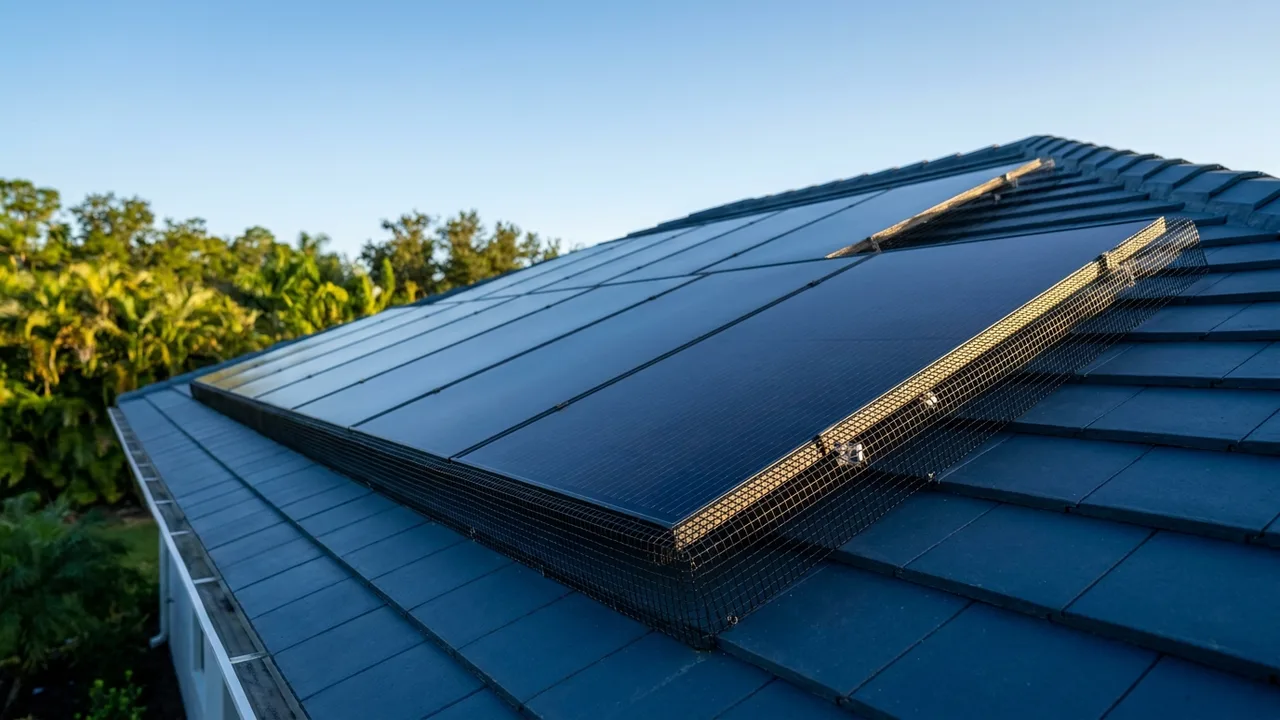
- Critter guard around the edge stops rodents getting under the panels in the first place.
What ends up living under your panels
We clear them out, then seal the gap so they can't come back.
Do squirrels really chew solar panel wires?
They do, and it's one of the pricier critter problems we run into. Squirrels — and roof rats, which are everywhere in Central Florida — are rodents, and a rodent's front teeth grow for its whole life. To keep them worn down, the animal has to gnaw constantly, on just about anything: branches, framing, and the DC wiring running under your panels. That wiring sits in the exact warm, sheltered pocket they want to nest in, so it takes the brunt of it. For the wider picture of what animals do under an array, see our bird and critter protection guide.
How dangerous is chewed solar wiring?
More dangerous than most homeowners realize. Chewed insulation and severed conductors do two things:
- They knock power offline. A gnawed or broken wire can take a single panel, or a whole string, out of production — sometimes on and off, which is maddening to track down.
- They create a fire risk. Exposed conductors and damaged connectors on live DC wiring can arc and overheat, right next to flammable nest material. This is the one we treat most urgently.
And because solar wiring carries high-voltage DC during daylight, this is not a DIY poke-around job. If you suspect chewed wiring, it's a solar panel repair for someone who works on live systems safely.
What are the signs squirrels are chewing my solar wires?
The tricky part is the damage is hidden under the panels, so you watch for the indirect signs:
- An unexplained drop in production on your monitoring app — especially a panel or string reading low or offline.
- Scratching, scurrying, or thumping on the roof, often at dawn or dusk.
- Visible gnaw marks on any wiring, conduit, or roof edge you can see.
- Droppings and nest debris under or around the array.
- Squirrels or rats running the same path up to the roof and under the panels, over and over.
If your app shows a dip and you're hearing activity too, don't wait — that combination usually means the wiring is already getting worked on.
How do you fix and prevent squirrel damage?
The right job runs in one sequence, not in pieces:
- Inspect and repair. We check the DC wiring and connectors under the whole array and repair any chewed or damaged sections, so the system is safe and back to full output.
- Clear and clean. Get any nest out and clean up the droppings before anything gets closed off.
- Seal with critter guard. Fit critter guard — a rigid metal mesh — around the full edge so squirrels and rats can't get back under the panels. Because it's chew-resistant metal, it holds up where soft plastic netting fails.
The order matters. Seal an array with a chewed wire still inside and all you've done is hide the damage behind the mesh. Inspect first, repair, then seal.
Why is this common in Central Florida?
Warm roofs year-round keep squirrels and roof rats active in every season here — there's no hard winter to thin them out or push them off the roof. Mature trees near the house give them an easy highway to the roofline, and an unsealed array gives them a five-star place to nest with exposed wiring to chew. We handle rodent-chewed systems across Ocala, Leesburg, and all of Central Florida — repairing the damage and sealing the array on any brand of system, from any installer. A maintenance plan with an annual perimeter check is the cheapest way to catch this before it turns into a repair bill.
Frequently asked questions
Do squirrels chew solar panel wires?
How do I know if a squirrel damaged my solar wiring?
Is chewed solar wiring a fire hazard?
How do you stop squirrels from getting under solar panels?
Serving solar owners across Central Florida
We clean, repair, maintain and protect solar systems throughout the region — any brand, any installer. Find your town:
Need a hand with your solar?
Service Solar Pros — any brand, any installer, across Central Florida. Call (407) 270-2542.
Get a free quote