
Solar Panels and a New Roof: What to Know Before You Reroof
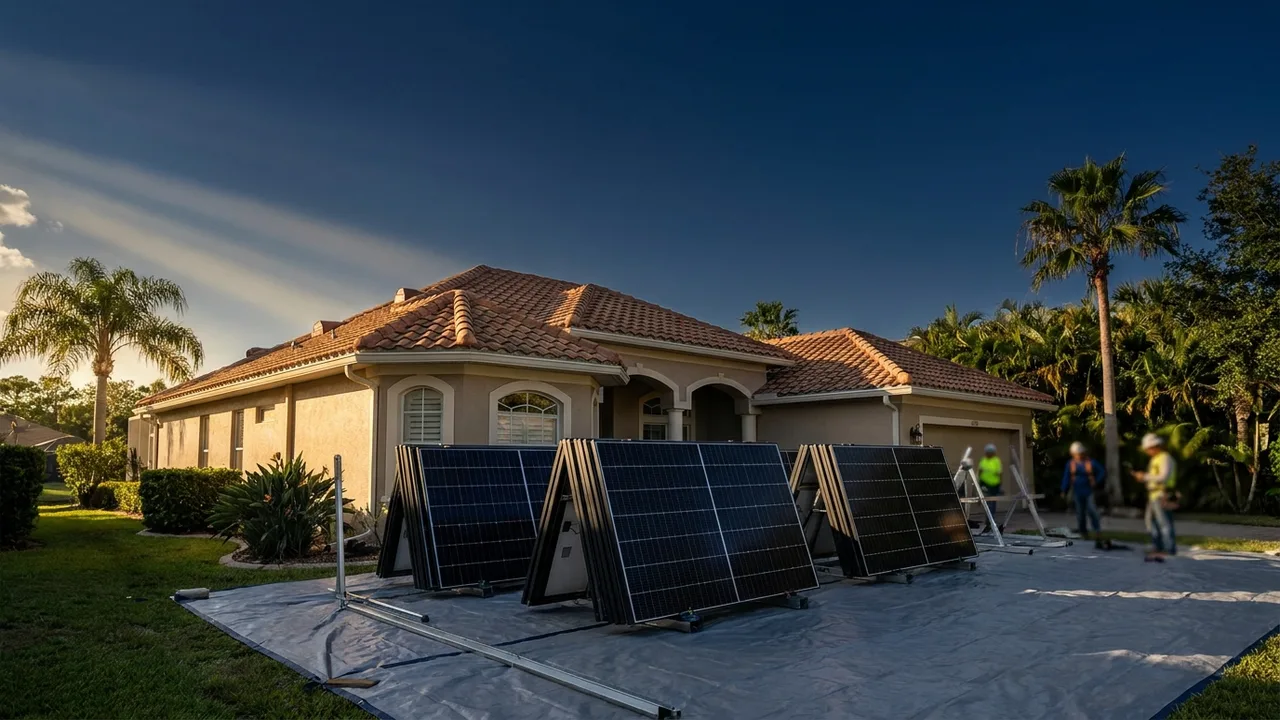
- Panels come off before a reroof and go back on after — roofers can't work under them.
- A solar service company does the electrical detach and reset; the roofer does the roof.
- Coordinate the two trades so the array is down for the shortest time possible.
- A reset is your chance to inspect wiring, connectors, and mounting you normally can't see.
- Florida roofs age fast in the sun, so a lot of solar owners hit this within the panels' lifespan.
Where the problem usually is
About three of four residential solar service calls trace back to the inverter or comms — not the panels themselves. That's why we run diagnostics first.
Do solar panels have to come off to replace a roof?
Yes. There's no way around it — roofers can't replace the shingles under a solar array while the panels are still mounted. The panels, the racking, and the roof attachments all sit on the surface being torn off, so the whole system has to be shut down, disconnected, and pulled before the reroof, then remounted and reconnected after. The industry calls this a detach-and-reset, or remove-and-reinstall.
It's a routine, well-understood job — but it's a real project with electrical work on both ends, not something the roofing crew handles on its own. This post is part of our solar maintenance and repair guide, and the cost side is in how much to remove and reinstall solar for a roof.
Who does what: the roofer vs. the solar company
A reroof with solar pulls in two trades, and it's worth knowing which does which:
- The solar service company safely shuts down and disconnects the system, pulls the panels and racking, stores them, then after the roof's done reinstalls the racking, remounts the panels, reconnects the wiring, and confirms the system's producing again.
- The roofer replaces the roof itself while the array's off.
Some roofers will tell you they can pull the panels themselves. But detaching and reconnecting a live electrical system is solar work — done wrong, it puts your equipment, your warranty, and safety on the line. Keeping the solar handling with a qualified removal and reinstall service protects all three.
How to coordinate the timing
The goal is to have the panels off for the shortest window possible, because while they're down you're not producing power. The clean sequence:
- Schedule the solar detach for the day before, or the morning of, the roofing start.
- The roofer knocks out the tear-off and the new roof.
- The solar company comes back to reset and recommission the array once the new roof's ready.
Good coordination between the two crews keeps a system from sitting on the ground for weeks. Book both in the same conversation so the dates line up — a service company that does this regularly will help you sequence it.
How a reroof affects your solar warranty
This is where care really matters. Sloppy handling during a detach-and-reset can void panel or workmanship warranties or, worse, open up roof leaks at the new mounting points. Two things protect you:
- Use qualified solar people for the solar work. Proper torque, correct flashing at the penetrations, and a clean electrical reconnection keep your warranties intact and the roof watertight.
- Keep the documentation. A written record of the detach and reset, with photos, is your proof the work was done right if a warranty question ever comes up.
A reset is also the perfect moment to inspect and refresh — more on that next.
Treat the reset as a free inspection
Here's the silver lining: your panels will never be easier to inspect than when they're already off the roof. A good service company uses the reset to check the backs of panels, the connectors, and the wiring you can never see normally, swap out any tired mounting hardware, and make sure everything's sound before it goes back up. It's honestly the ideal time to catch a developing hot spot or a corroded connection.
If your system hasn't been serviced in a while, folding a full inspection into the reset means you get a reroof and a clean bill of health for the solar in one project. See do solar panels need maintenance for what that covers.
The Florida reroof reality
Central Florida shingle roofs take a beating from sun, heat, and storms, and a lot of them last only 15 to 20 years — shorter than the 25-year life of the solar panels sitting on top. That mismatch means a big share of Florida solar owners will face a reroof while their panels are still working. Throw in the insurance-driven roof replacements that have been common across the state, and detach-and-reset is one of the most requested solar services down here.
Plan it right — right crews, tight timing, documented work — and a potential headache turns into a routine project.
Planning a reroof with solar? We handle the panels
We do the full detach and reset, coordinate with your roofer, inspect everything while it's down, and recommission the system so it's producing again — any brand, any installer. We serve Eustis and all of Central Florida. Learn more about our solar removal and reinstall service, request a free quote, or call (407) 270-2542.
Frequently asked questions
Do solar panels need to be removed to replace a roof?
Can my roofer remove the solar panels?
How long are solar panels off during a reroof?
Will replacing my roof void my solar warranty?
Is a reroof a good time to service my solar?
Serving solar owners across Central Florida
We clean, repair, maintain and protect solar systems throughout the region — any brand, any installer. Find your town:
Need a hand with your solar?
Service Solar Pros — any brand, any installer, across Central Florida. Call (407) 270-2542.
Get a free quote